Posts

Showing posts from April, 2019

Observability of the Java Virtual Machine

Image
The JVM is one of the most observable runtimes. It provides us lots of tools for troubleshooting a JVM application in production. 1. Thread observability Threads are how the JVM actually does work. When something is wrong in production, the symptom is almost always a thread: stopped, blocked, leaking etc. Thread dumps work on any JVM with no  instrumentation, no agents, no restarts. <Example project link with /threaddump endpoint>         // (1) Deadlock — two threads grab the same pair of locks in opposite order.         new Thread(() -> grab(LOCK_A, LOCK_B), "deadlock-A-then-B").start();         new Thread(() -> grab(LOCK_B, LOCK_A), "deadlock-B-then-A").start(); http://localhost:8080/actuator/threaddump To list the JVMS, we can use the command below. PS C:\observe-jvm> jps -lv 25296 jdk.jcmd/sun.tools.jps.Jps -Dapplication.home=C:\Program Files\Microsoft\jdk-21.0.3.9-hotspot -Xms8m -Djdk.module.main=...
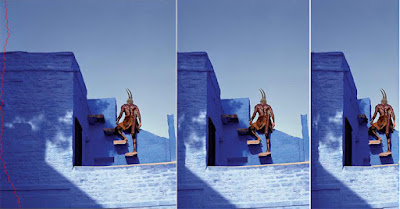
Image Resizing with Directed Graphs: Seam Carving in Java

Image
Seam Carving is an image resizing technique that was discovered in 2007 and it is a feature in Photoshop. We will look at the implementation of this technique using directed graph data structure. Below are some wikipedia links to the underlying data structre: https://en.wikipedia.org/wiki/Directed_acyclic_graph https://en.wikipedia.org/wiki/Shortest_path_problem The goal is to remove a seam (vertical or horizontal) from the image one by one. To calculate a seam, we need to calculate the energies of the pixels. Let's look at the energy method of our SeamCarver class: public class SeamCarver {     private Picture picture; //... public double energy(int x, int y) {         if (x < 0 || x >= width) {             throw new IllegalArgumentException();         }         if (y < 0 || y >= height) {             throw new IllegalArgu...

Popular posts from this blog

The WeakReference class, monitoring memory leak and garbage collection in a Java application

Simplescalar Simulator - Part 2: sim-outorder.c

Notes on Java Performance